iBuy Lucent - Configure a Cell Site Online (Case Study)
By Chris Armbruster (lead engineer)
Introduction
Brief Overview
In the late 1990s, the telecommunications industry was on the cusp of a
major transformation, driven by rapid technological advancements, a
cellular network buildout and evolving customer needs. During this time,
I had the opportunity to lead a groundbreaking innovation at Lucent
Technologies' Wireless Division. Spanning the years 1998 and 1999, this
project aimed to revolutionize how wireless network operators ordered
cell site equipment. The centerpiece of this transformation was the
development of an online configurator – a tool that not only streamlined
the equipment ordering process but also marked a significant departure
from the industry's traditional, time-consuming methods. This project
started as an experiment, grew into a proof of concept and then matured
into a new way of doing business.
My Role
As an engineer at Lucent Technologies, my role was to lead the
development of this full stack application. My responsibilities
encompassed the entire software development lifecycle, from
conceptualizing the solution to its implementation. On the frontend, I
utilized HTML and JavaScript to create a user-friendly interface that
allowed customers to seamlessly configure their required cell site
equipment. The backend was powered by a combination of Microsoft Active
Server Pages, COM objects, and a SQL Server database, ensuring a smooth
UX and scalable process. This project was not just a technical endeavor;
it was a strategic initiative that required close collaboration with
various stakeholders, including product managers, sales teams, and, most
importantly customers.
Background and Challenge
Wireless Industry Context
In the late 1990s, the telecommunications industry was navigating a
period of rapid growth and technological advancement. The demand for
wireless communication was soaring, necessitating the expansion of
network infrastructure at an unprecedented rate. This expansion required
wireless network operators to frequently configure and order new cell
site equipment, a process pivotal to maintaining and enhancing network
capabilities. Traditionally, this process was labor-intensive and
time-consuming. Operators had to pay substantial fees for site
engineering surveys and wait weeks for the design and quote before
placing an order. This approach, while standard for the time, was
increasingly seen as a bottleneck in an industry accelerating towards
faster, more efficient technologies and services.
Understanding a Cell Site
Before delving into challenges, it's essential to understand what a cell
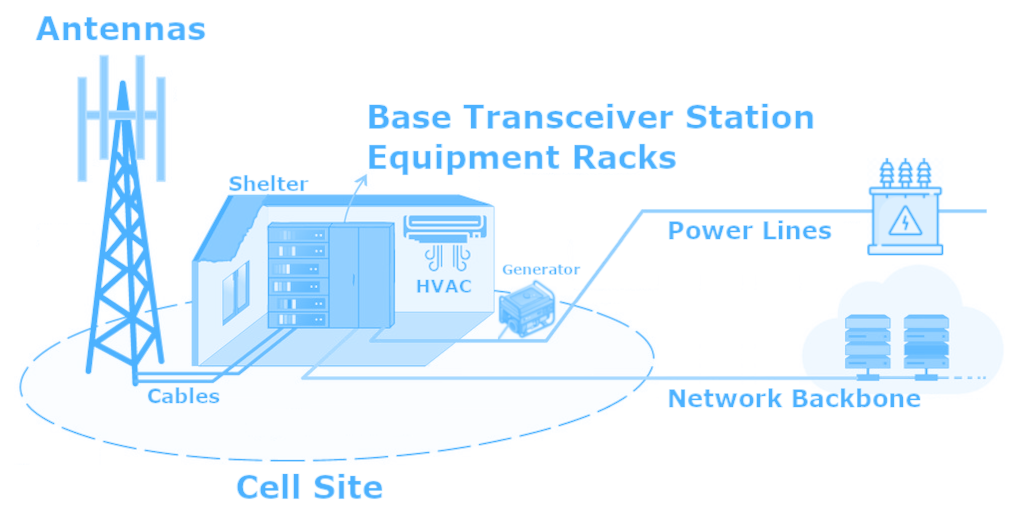
site is. A cell site (see Fig 1) is a critical component in a wireless
cellular network. It consists of several key elements:
Antenna: This is used to transmit and
receive radio frequencies. It's typically mounted on a tower or high
structure to maximize coverage.
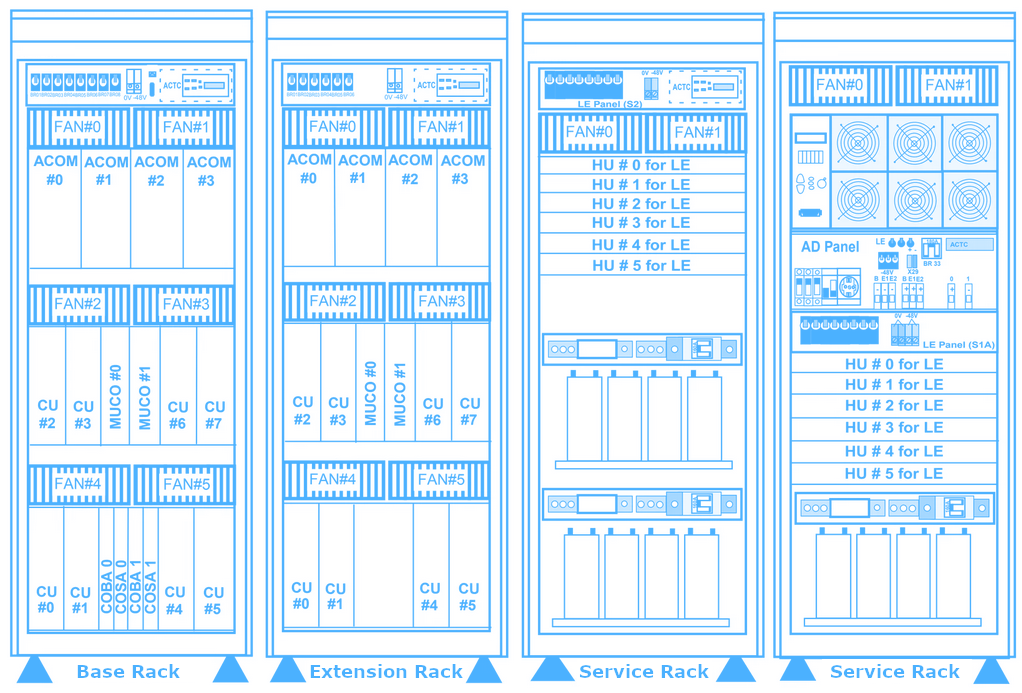
Base Transceiver Station (BTS) Equipment Racks:
(See Fig 2) These are the hardware components that facilitate wireless
communication between the network and mobile devices. They process the
radio frequencies and handle the traffic of voice and data. This
equipment has quite a bit of optionality depending on the customer's
application and initial traffic volume.
Equipment Shelter: This secure area
houses critical electronic equipment necessary for the operation of
the cell site.
Incoming Power: Reliable power
sources are essential for the continuous operation of the cell site.
Backhaul Connection: This refers to
the link between the cell site and the operator's main network,
crucial for data transfer and connectivity.
Cables: These include coaxial cables
for connecting antennas to equipment, power cables, and fiber-optic
cables for the backhaul connection.
Fig 1: Example of a Wireless Cell Site
Fig 2: Example of Configured BTS Equipment Racks
Challenge
The specific challenge lay in the outdated process of equipment ordering
and configuration. The conventional method involved several cumbersome
steps:
Site Engineering Fee: Operators were
required to pay fees, often as high as $50,000, for a site survey and
design.
Time-Consuming Process: The entire
process, from initial survey to receiving a quote, could take over
four weeks. This duration was becoming incompatible with the
fast-paced nature of the industry.
Manual Intervention: Each order
necessitated considerable manual input and interaction, leading to
increased chances of errors and inefficiencies.
Customer Experience: From the
perspective of network operators, this method was not only costly and
slow but also lacked transparency and flexibility in configuring
equipment to their specific needs.
These challenges represented a significant hindrance to the efficiency
and scalability of network expansion. In an industry rapidly evolving to
meet increasing consumer demands for connectivity, this traditional
approach was becoming a critical bottleneck, underscoring the need for a
more streamlined, technology-driven solution.
Project Objective
Innovation Goal
The primary objective of this project was to improve the customer
experience by reengineering the way wireless network operators
configured and ordered cell site equipment. At the core of this
initiative was the development of an online configurator, a tool
designed to replace the outdated, manual, and time-consuming processes
that had long been the industry standard. The aim was to create a system
that was not only more efficient and cost-effective but also provided a
more transparent and user-friendly experience for the customers.
Expected Benefits
The anticipated benefits of this project included:
Reduced Time and Cost: By automating
the configuration and ordering process, the project aimed to
significantly reduce the time and cost associated with site surveys
and equipment ordering. Eliminating the need for expensive site
engineering fees and lengthy waiting periods was expected to be a
major upside for network operators.
Enhanced Accuracy and Efficiency: The
online configurator was designed to minimize manual interventions,
thereby reducing the likelihood of errors. This increased accuracy
would lead to more efficient processing of orders and configurations,
ultimately benefiting both Lucent Technologies and its customers.
Improved Customer Experience: By
allowing customers to configure equipment according to their specific
needs via a user-friendly online interface, the project sought to
enhance customer satisfaction. This level of customization and
transparency was a leap forward in customer service.
Business Optimization: A strategic
goal of the configurator was to guide customers towards more
profitable configurations for Lucent Technologies. By intelligently
recommending certain configurations, the tool could subtly influence
purchasing decisions, leading to more advantageous outcomes for the
company.
The online configurator was more than just a technological upgrade; it
represented a strategic shift towards a more agile, customer-centric
approach in the telecommunications industry. This project aimed not only
to meet the immediate needs of network operators but also to pave the
way for future innovations in the process for building out a network.
Solution
Context: Full Stack Technologies at the Time
In the late 1990s, the internet was experiencing rapid and
transformative growth. This period was characterized by a blend of
excitement, experimentation, and enthusiasm in web technologies.
However, it also presented unique challenges in terms of technology
standards and capabilities, which significantly influenced the approach
to developing the online configurator.
Emergence of Dynamic Web Pages: The
late 1990s saw the introduction of Microsoft Active Server Pages
(ASP), a technology for dynamically generated web pages. ASP
represented a big step forward by enabling server-side scripting with
interactive pages, a critical component in the project.
Limited Cross-Browser CSS Support:
During this time, Cascading Style Sheets (CSS) were still developing,
with varying support across different web browsers. This lack of
standardization necessitated a reliance on HTML and inline styles for
user interface design, prioritizing compatibility and functionality
over aesthetics.
Non-Existence of AJAX: Asynchronous
JavaScript and XML (AJAX) had not yet been invented, which meant that
real-time data exchange and page updates had to be managed
differently. Often, this required full page reloads for each user
interaction, presenting a challenge in creating a seamless user
experience.
Component Object Model (COM) Technologies:
COM technologies were extensively used in Windows environments for
building software components that could be modularized. This was an
integral part of the backend development, enabling the creation of
scalable and efficient server-side components.
In a landscape of excitement and experimentation, the development of the
online configurator required innovative solutions to overcome these
technological barriers. The focus was on leveraging the best of what was
available while navigating the limits of the capabilities at that time.
Architecture and Its Components
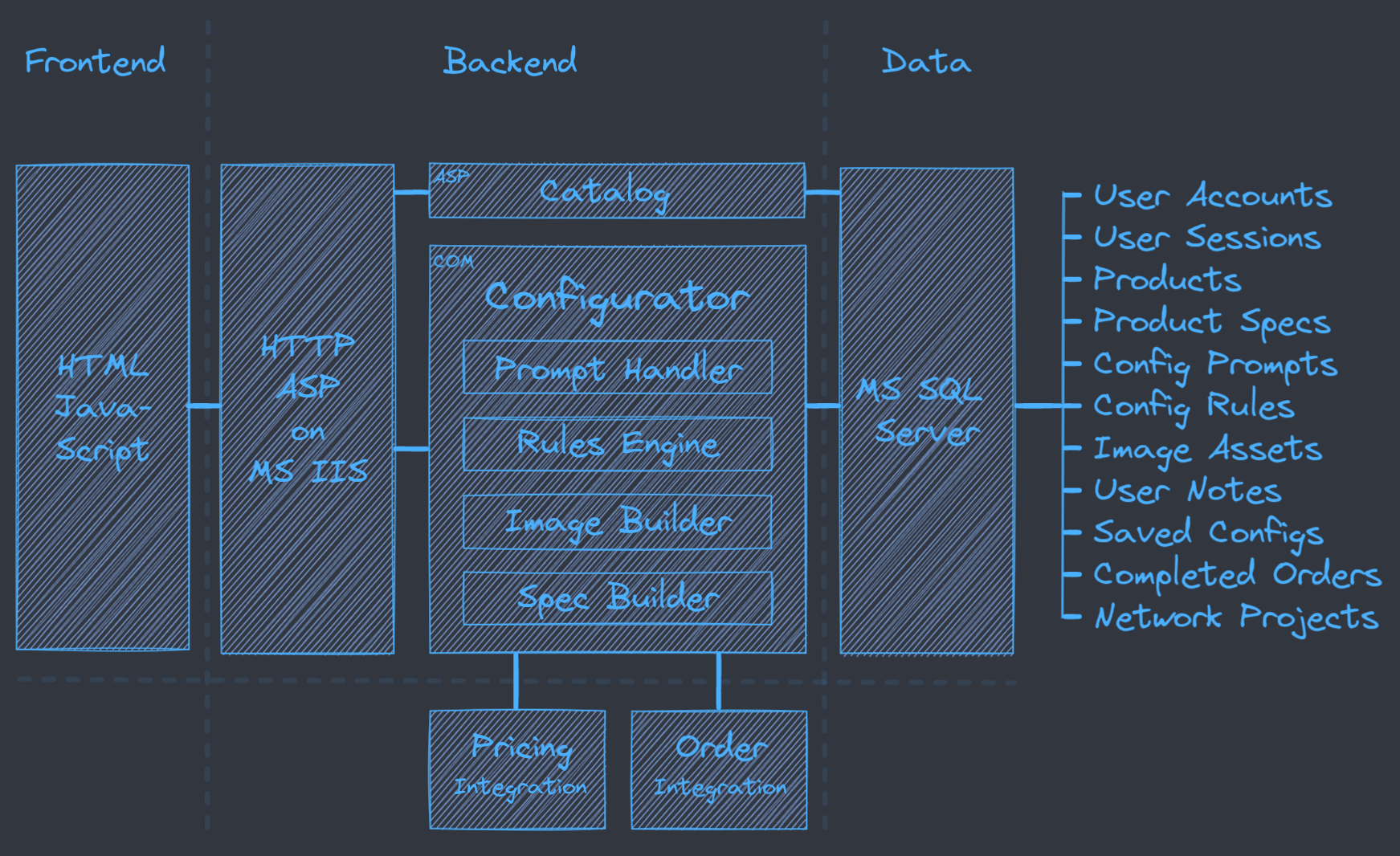
Fig 3: Solution Architecture
Frontend
HTML and JavaScript: The frontend was
developed using HTML for the structure and layout of the web pages,
and JavaScript for interactivity. Given the limitations of the time in
terms of browser compatibility and technology, the use of these
technologies was aimed at ensuring maximum reach and functionality.
Backend
Microsoft ASP on IIS: The backend of
the application was powered by Microsoft Active Server Pages (ASP)
running on Internet Information Services (IIS). ASP provided the
necessary server-side scripting capability to dynamically generate web
content, essential for a responsive and interactive user experience.
Catalog (implemented with ASP): The
catalog component was implemented using ASP. It served as the list of
available products and services, allowing users to browse and select
items as part of their configuration.
Configurator implemented with COM:
The core of the application was the configurator, implemented using
Component Object Model (COM). This configurator was composed of four
main capabilities:
Prompt Handler: Managed user
inputs and interactions, guiding them through the configuration
process.
Rules Engine: A set of predefined
rules that dictated the configuration logic, ensuring that the
selections made by users were valid and feasible.
Image Builder: This innovative
feature provided a graphical depiction of the user’s
configuration, enhancing the user experience by visually
representing their selections.
Spec Builder: Translated user
responses into technical specifications that could be priced and
ordered, bridging the gap between user selections and actionable
order details.
Data
Microsoft SQL Server: The database
was managed using Microsoft SQL Server. This housed critical data
including user accounts, user sessions, products, product
specifications, configuration prompts, configuration rules, image
assets, saved configurations, placed orders, user notes, and network
projects. The use of SQL Server ensured robust data management and
scalability.
Integrations
Pricing Integration: Connected the
configurator with a pricing system, allowing real-time pricing updates
based on the user’s configuration choices.
Order Placement Integration:
Facilitated the direct placement of orders from the configurator,
streamlining the process from configuration to order fulfillment.
This architecture served as a complete solution, addressing both the
technical and practical aspects of the equipment ordering process. Each
component was designed to contribute to an efficient, user-friendly, and
scalable system, ultimately transforming the way wireless network
operators configured and ordered equipment.
Project Impact
The implementation of the online configurator at Lucent Technologies
marked a significant milestone for the business and its customers,
achieving and even surpassing the set objectives. The project's impact
was profound, transforming the process of equipment ordering and
configuration.
Streamlined Process: Previously, a
process that could take up to four weeks was transformed into a
real-time operation. The need for a physical site survey and
engineering design, which were time-consuming and costly, was
eliminated. This dramatic reduction in time not only enhanced
efficiency but also accelerated the pace of network expansion.
Cost Savings: One of the most
significant financial impacts was the avoidance of the engineering fee
required for site surveys and designs. With costs that could escalate
up to $50,000, the online configurator offered a cost-effective
alternative, providing substantial savings for network operators.
High Transaction Volume: By the end
of the second year, the configurator facilitated transactions
amounting to $600 million. This figure not only underscored the tool’s
effectiveness and reliability but also demonstrated the high demand
and acceptance of the new system by customers.
Order Accuracy: The transition to a
digital configurator significantly improved the accuracy of orders.
The automation of the configuration process reduced the likelihood of
human error, ensuring that orders were precise and aligned with
customer requirements.
Enhanced Customer Experience: The
configurator greatly improved the customer experience. Its
user-friendly interface and real-time configuration capabilities
provided customers with an unprecedented level of control and
transparency in the equipment ordering process.
Business Optimization: The project
not only streamlined operations but also aligned them with Lucent
Technologies' strategic business goals. By directing customers to more
profitable configurations, the company could optimize its business
outcomes.
Overall, the project's impact was transformative, setting new standards
for efficiency, customer satisfaction, and strategic business
optimization. It demonstrated how innovative technology solutions could
address longstanding industry challenges, paving the way for future
advancements.
Epilogue: Modernizing with Today's Technologies
Reflecting on how this "Configure a Cell Site Online" app might evolve
with today's technologies and best practices, here are some noteworthy
opportunities.
Upgrade to ASP.NET While Embracing a SPA Paradigm and MVC Pattern
Single Page Application: SPA
frameworks like Angular, React, or Vue.js can revolutionize the user
experience by creating fluid, responsive, and interactive web
interfaces. These SPAs would handle client-side interactions
dynamically, fetching data asynchronously from the server,
significantly enhancing the application's responsiveness and reducing
page reloads.
Model View Controller: MVC ensures a
clean separation of concerns - with Models handling data, Views
managing UI, and Controllers dealing with user input and interactions.
This separation would not only streamline development but also enhance
maintainability and testability of the application. The MVC pattern,
coupled with ASP.NET's powerful server-side capabilities, would
facilitate efficient data handling and robust backend processing.
Transition to Another Common Stack like PERN
React/Redux for Frontend: React,
coupled with Redux for state management, would provide a highly
responsive and interactive user interface. This would enhance the user
experience, offering a more intuitive and engaging way to configure
and visualize equipment selections.
Node.js and Express for Backend: The
server-side would be powered by Node.js with Express, allowing for
efficient handling of requests, streamlined data processing, and
seamless integration with various services.
PostgreSQL for Database Management:
PostgreSQL would serve as a reliable and scalable database solution,
handling complex data operations with ease.
Leverage AI Technologies
Predictive Analysis: AI could analyze
past configurations and orders to predict and suggest the most
suitable configurations for customers.
Enhanced Personalization: Machine
learning algorithms could offer personalized recommendations based on
the customer's history and preferences.
Automated Troubleshooting: AI-driven
chatbots or virtual assistants could provide real-time assistance,
further improving the customer experience.
Virtual and Augmented Reality
Virtual Reality (VR): VR could be
used to create an immersive experience where customers can virtually
explore and interact with their configured equipment in a simulated
environment.
Augmented Reality (AR): AR technology
could aid in visualizing how the equipment would fit into the actual
physical space at the cell site, offering a more practical and
interactive approach to configuration.
Internet of Things (IoT) Integration
Automated Inventory Management: IoT
devices could monitor and report the existing equipment at a site,
aiding in determining what additional equipment is needed.
Predictive Maintenance and Ordering:
IoT sensors could predict equipment failures or needs, automatically
triggering the configuration and ordering of replacement parts.
There are many other modernization considerations that could be
incorporated as well. To name a few: cloud computing for scale and cost
efficiency, containerization and microservices for modularity,
blockchain for enhanced security, user experience/accessibility, and
sustainable computing practices.